Introduction
Cold chain efficiency is a growing priority for South African businesses handling temperature-sensitive goods. From food and beverages to pharmaceuticals and industrial products, maintaining temperature integrity throughout transport and storage is essential for quality, compliance, and cost control.
However, long transport distances, climate variability, and rising energy costs place constant strain on cold chain systems. According to the Food and Agriculture Organization (FAO), up to 14% of food is lost globally before reaching retail, with temperature control failures being a major contributor.
(Source: https://www.fao.org/platform-food-loss-waste/en)
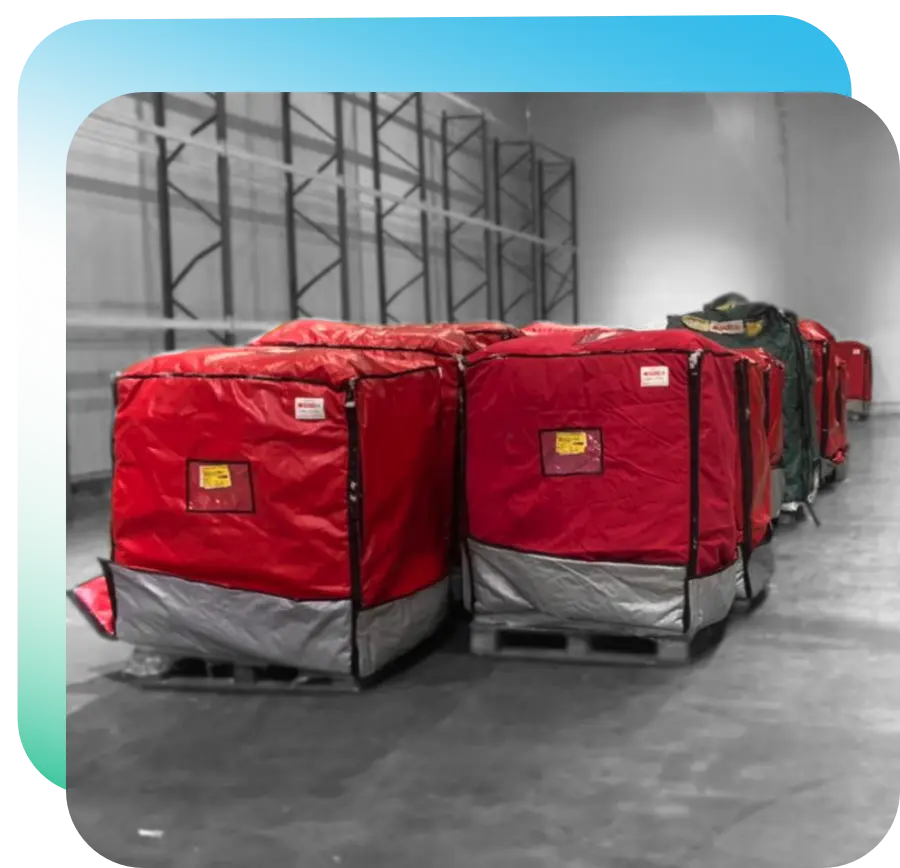
Reusable thermal covers offer a proven solution. By insulating palletised goods and containers, thermal covers help stabilise temperatures, reduce reliance on active refrigeration, and enhance overall cold chain efficiency — particularly in challenging environments like South Africa.
Challenges of Cold Chain Logistics South Africa
South Africa’s cold chain operates under conditions that make temperature control especially demanding.
Long Transport Routes and Climate Exposure
Goods frequently travel hundreds of kilometres between production facilities, ports, distribution centres, and retailers. During loading, offloading, and cross-docking, products are exposed to ambient heat, increasing the risk of temperature excursions.
The World Health Organization (WHO) highlights that even brief exposure to temperatures outside recommended ranges can compromise product safety and shelf life.
(Source: https://www.who.int/publications/i/item/WHO-IVB-15.01)
Rising Energy and Refrigeration Costs
Refrigeration is energy-intensive. As electricity and fuel costs rise in South Africa, logistics operators face increasing pressure to maintain cold chain performance while controlling operational expenses.
What Are Thermal Covers and How Do They Work?
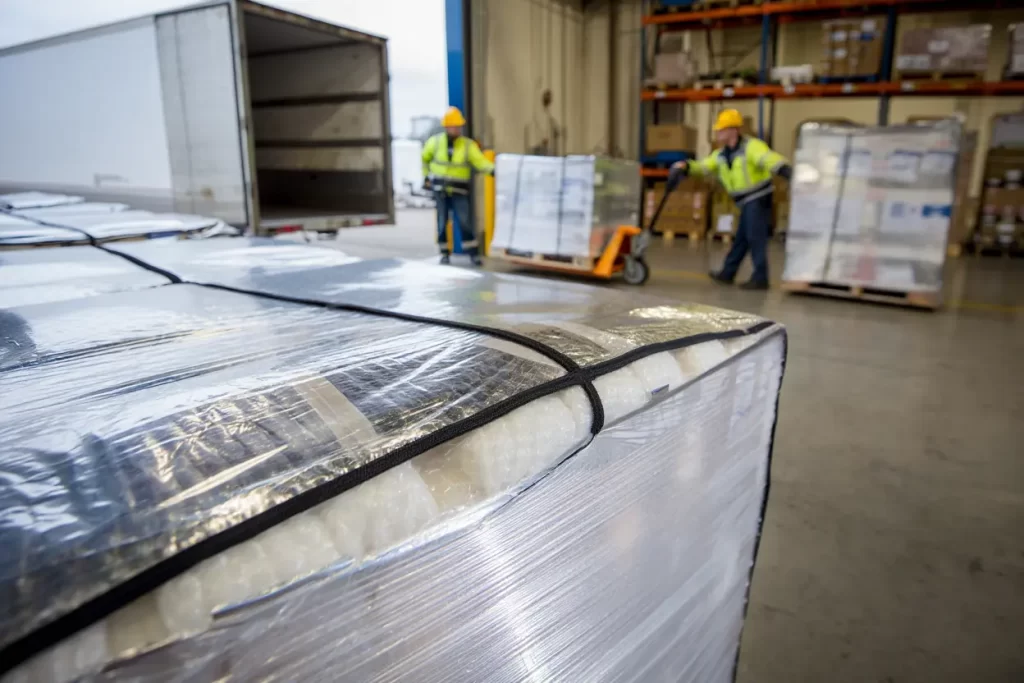
Thermal covers are insulated, reusable solutions designed to protect temperature-sensitive goods during transport and storage.
Insulation Technology Explained
Thermal covers use multi-layer insulation materials that slow heat transfer between the product and its external environment. This passive insulation helps maintain internal temperatures for extended periods without continuous refrigeration.
According to the Global Cold Chain Alliance (GCCA), passive thermal protection plays a critical role in reducing temperature variability across supply chains.
(Source: https://www.gcca.org/resources)
Reusable Thermal Covers and Custom-Engineered Technology
Unlike single-use packaging, reusable thermal covers are designed for repeated use. Cover Solutions manufactures bespoke thermal covers tailored to specific pallet sizes, temperature ranges, and industry requirements, ensuring consistent performance across multiple use cycles.
How Thermal Covers Improve Cold Chain Efficiency
Reducing Temperature Fluctuations
Thermal covers act as a buffer against external heat during transport delays, loading, and unloading. This reduces temperature spikes that often occur outside refrigerated environments.
Studies published by the International Institute of Refrigeration (IIR) confirm that temperature variability is one of the leading causes of cold chain inefficiency and product degradation.
(Source: https://iifiir.org/en)
Lowering Dependence on Active Refrigeration
By maintaining temperature stability, thermal covers reduce the need for constant mechanical cooling. This lowers energy consumption, reduces fuel usage in refrigerated vehicles, and supports more cost-efficient logistics operations.
Improving Operational Flexibility
Thermal covers allow businesses to manage short-term disruptions — such as staging delays or cross-docking — without immediate temperature loss. This flexibility improves logistics efficiency while reducing risk.
Protecting Food Safety and Product Integrity
Maintaining temperature integrity is essential for food safety and quality compliance.
Supporting Food Safety Standards
Thermal covers help protect perishable goods from heat exposure, supporting compliance with food safety systems such as HACCP (Hazard Analysis and Critical Control Points).
The Codex Alimentarius Commission, jointly managed by the FAO and WHO, emphasises temperature control as a core requirement for food safety management systems.
(Source: https://www.fao.org/fao-who-codexalimentarius/en)
Reducing Product Loss and Waste
Improved temperature control leads to fewer rejected loads, reduced spoilage, and longer shelf life — all of which directly improve profitability and sustainability.
Sustainability and Cost Benefits
Energy Reduction and Emissions Control
By reducing reliance on refrigeration, thermal covers help lower energy consumption and associated carbon emissions. This aligns with sustainability goals and environmental responsibility targets.
The International Energy Agency (IEA) identifies energy efficiency in cold chains as a key opportunity for reducing emissions in food and logistics sectors.
(Source: https://www.iea.org/topics/energy-efficiency)
Reusable Design and Waste Reduction
Reusable thermal covers reduce dependence on single-use insulation materials and disposable packaging, contributing to waste reduction and circular economy practices.
Why Bespoke Thermal Covers Matter
Not all logistics operations are the same. Custom-designed thermal covers deliver significantly better performance than generic solutions.
Designed for Specific Use Cases
Cover Solutions produces thermal covers engineered for FMCG, industrial storage, logistics, and temperature-sensitive supply chains. Custom sizing, insulation thickness, and materials ensure optimal protection and efficiency.
Long-Term ROI
High-quality reusable thermal covers offer strong returns through durability, lower operating costs, reduced waste, and improved product protection.
Conclusion
Thermal covers are a critical tool for enhancing cold chain efficiency in South Africa. By reducing temperature fluctuations, lowering energy costs, and protecting product integrity, they address some of the most significant challenges facing modern supply chains.
For businesses seeking reliable, sustainable, and cost-effective cold chain solutions, reusable thermal covers are no longer optional — they are essential.