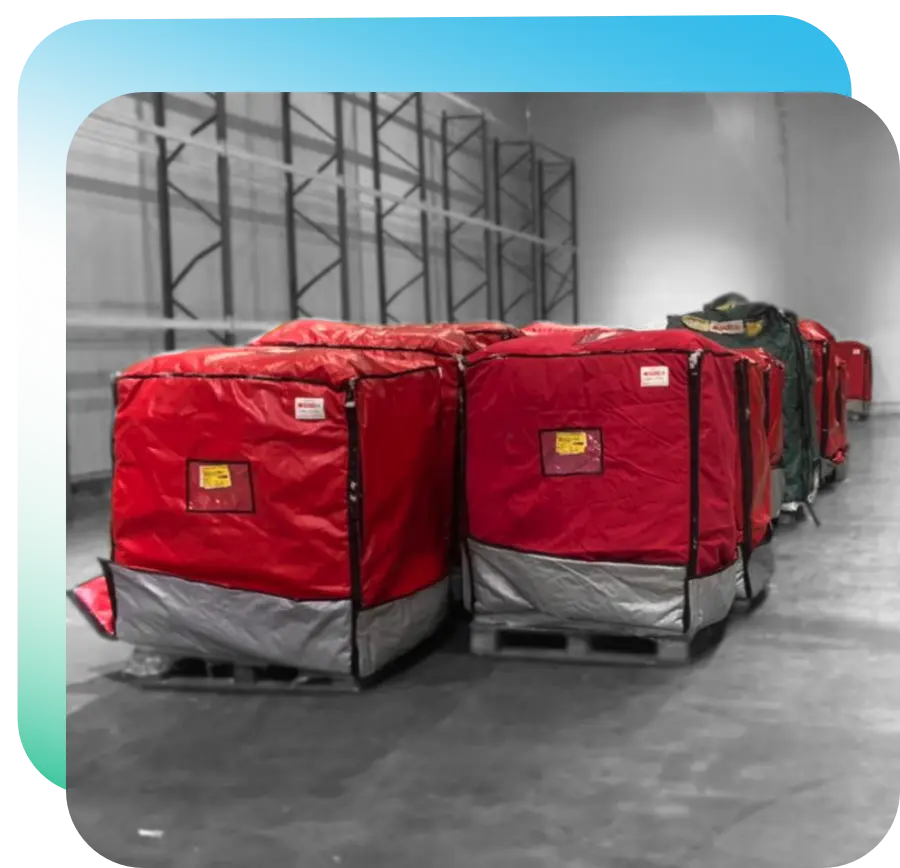
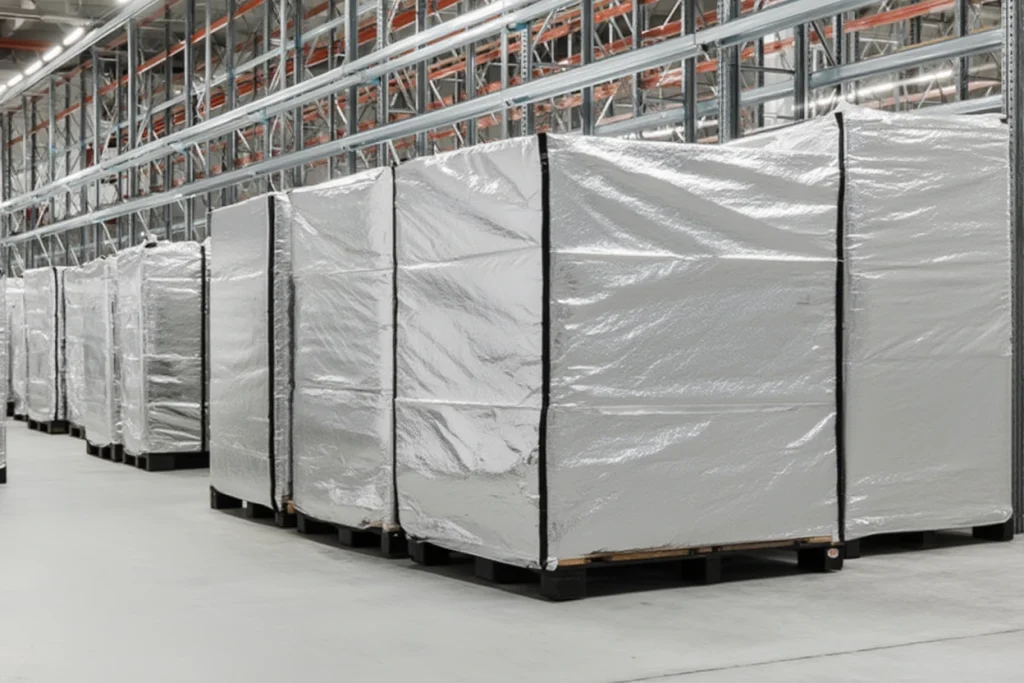
Choosing the right thermal pallet cover for an FMCG operation comes down to four factors: pallet dimensions, the temperature delta you need to maintain, journey duration, and how frequently the cover will be reused. Get these right and a custom cover will protect your product consistently across every run. Get them wrong and you’re paying for something that underperforms when it matters most — typically in the loading dock on a 35°C Cape Town summer afternoon.
This guide walks you through each factor, what to ask your manufacturer, and how to get a cover specified correctly for your specific operation.
Why standard thermal pallet covers fail in FMCG logistics
Standard off-the-shelf thermal covers are designed to fit the most common pallet dimensions. That sounds practical until you’re running non-standard bays, mixed pallet heights, or equipment that doesn’t conform to the 1200 × 1000mm ISO standard. A cover that doesn’t fit correctly — even by 80mm — leaves gaps at the base or bunches at the top, both of which create thermal bridging points where temperature bleeds in or out.
FMCG logistics also involves more handling events per shipment than most other sectors. A cover that fits loosely gets dislodged during loading, repositioned incorrectly by different operators, and eventually develops wear patterns at the stress points. For operations running the same cover 20 or 30 times a week, dimensional accuracy isn’t a preference — it’s a performance requirement.
The alternative is a cover manufactured to your exact pallet and equipment specifications, which eliminates fit-related failure before it starts.
The four factors that determine the right cover for your operation
1. Pallet dimensions and equipment profile
Measure the loaded pallet height, not the empty pallet height. FMCG pallets vary significantly depending on product stacking — a dairy DC running 1.4m loaded heights needs a different cover than a frozen goods operation at 1.8m. Width and depth matter equally, particularly if your operation uses half-pallets, euro pallets, or custom trolleys.
If your operation includes refrigerated trucks with specific bay dimensions, or roll cages that need individual covers, those profiles need to be measured and specified separately. A manufacturer building to spec will ask for these dimensions upfront — if they don’t ask, that’s a signal.
2. Temperature delta required
Temperature delta is the difference between the ambient temperature your product will be exposed to and the temperature it needs to stay within. A frozen goods pallet moving through a 30°C loading dock needs a much higher-performing cover than a chilled dairy pallet moving between two refrigerated environments at similar temperatures.
In South African FMCG logistics, the most demanding scenarios involve last-mile delivery in summer — products leaving a refrigerated DC and sitting on an open truck in peak heat. The cover needs to be specified for the worst-case ambient temperature your operation realistically encounters, not the average.
For most chilled FMCG applications, a multi-layer cover with a reflective outer layer, polyethylene foam core, and durable inner lining provides effective protection across the temperature ranges involved. For frozen goods or extended transit times, thicker foam cores or additional reflective layers may be required. See our materials and insulation technology page for a breakdown of how each layer contributes to thermal performance.
3. Journey duration and handling frequency
A cover protecting product for a 45-minute DC-to-store run performs a different job to one protecting product on a 6-hour inter-provincial run. Both can be handled by the right cover — but the specification will differ.
For short, high-frequency runs (daily store replenishment, last-mile delivery), durability and ease of use matter as much as insulation performance. A cover that takes two people and 90 seconds to apply is a problem when your drivers are running 18 drops a day. For longer transit, insulation performance takes priority — the cover needs to maintain temperature across a longer exposure window without relying on the product’s own thermal mass.
Ask your manufacturer what the expected cycle life is for their covers under your usage pattern. A well-manufactured reusable cover should perform consistently for a minimum of 12 months under daily use, which is why a workmanship guarantee matters — it signals that the manufacturer has confidence in what they’ve built.
4. Reuse frequency and maintenance requirements
FMCG operations that run high reuse frequencies need covers that can handle it. The material composition, stitch quality, and closure systems all degrade at different rates depending on how often the cover is applied, removed, folded, and stored. A cover used twice a week lasts considerably longer than one used twice a day, even if they’re built from identical materials.
Consider your cleaning and maintenance requirements too. FMCG environments — particularly food and dairy — have hygiene standards that affect what materials are acceptable. Non-woven inner linings are generally easier to wipe clean and dry faster than fabric alternatives. If your covers are going into a wash cycle, confirm the materials and stitching are rated for it.
Reusable vs disposable: the ROI argument for FMCG
Disposable thermal covers have a role in specific FMCG scenarios — single-use pharmaceutical shipments, for example, where traceability requires a fresh cover per consignment. For standard FMCG pallet logistics, however, the economics of reusable covers are straightforward.
A quality reusable pallet cover manufactured to specification typically costs three to five times more upfront than a disposable equivalent. Over 12 months of daily use, the cost per use of a reusable cover is a fraction of the disposable alternative — often 80 to 90 percent lower. The environmental case follows the same logic: fewer covers manufactured, fewer disposed of, lower total material consumption per unit of product protected.
For FMCG operations managing dozens or hundreds of pallet movements per day, the cumulative difference is significant. The SPAR DC, for example, uses Coversolutions covers across their perishable logistics operation specifically because the reusable model delivers consistent performance at a lower total cost than single-use alternatives.
How to get a custom cover specified for your operation
Getting a custom cover right is a straightforward process if you approach it with the right information. Before contacting a manufacturer, have the following ready:
- Loaded pallet dimensions (height, width, depth) for each pallet or equipment type you need covered
- The temperature range your product needs to stay within during transit
- The ambient temperatures your operation realistically encounters (worst case, not average)
- Your typical journey duration and number of handling events per run
- Your expected weekly usage volume and any cleaning or hygiene requirements
A reputable manufacturer will use this to recommend the right material specification and produce a sample before committing to a full order. At Coversolutions, samples are typically ready within seven days — this allows you to test the cover in your actual operation before placing a larger order.
For FMCG operations with multiple pallet types or equipment profiles, it’s worth specifying each separately. A single cover trying to fit multiple profiles will underperform on all of them. A correctly specified cover for each application delivers consistent results across the board.
Request a custom quote for your FMCG operation →
Frequently asked questions
What is the standard pallet size for FMCG covers in South Africa?
The most common pallet dimension in South African FMCG logistics is 1200 × 1000mm (ISO standard), but loaded heights vary significantly by product type — typically between 1.2m and 1.8m. Many operations also run half-pallets, euro pallets, and roll cages that require separate cover specifications. A custom-manufactured cover is measured to your loaded pallet profile, not a standard template.
How long does a reusable thermal pallet cover last in daily FMCG use?
A well-manufactured reusable cover should maintain consistent insulation performance for a minimum of 12 months under daily use. Coversolutions covers come with a 12-month workmanship guarantee. Actual lifespan depends on usage frequency, handling conditions, and whether the covers are stored correctly between runs.
What temperature delta can a thermal pallet cover maintain?
This depends on the material specification — specifically the foam core thickness and the number of reflective layers. For most chilled FMCG applications (2°C to 8°C product temperature in ambient conditions up to 35°C), a standard multi-layer cover is sufficient. For frozen goods or extended transit in extreme heat, a heavier specification is required. The right answer depends on your specific application — which is why getting a sample tested in your operation before a full order is worth doing.
Do FMCG thermal covers need to meet any food safety standards?
The covers themselves are not required to be food-grade certified in most FMCG applications, as they do not come into direct contact with exposed product. However, inner lining materials should be appropriate for the environment — non-porous, wipe-clean, and resistant to moisture absorption. If your operation has specific HACCP requirements around materials in contact zones, confirm these with your manufacturer before ordering.
How quickly can a custom thermal pallet cover be manufactured?
At Coversolutions, samples are typically ready within seven days of receiving dimensions and specifications. Full orders are scheduled based on volume and current production pipeline — contact the team for a specific lead time on your order.