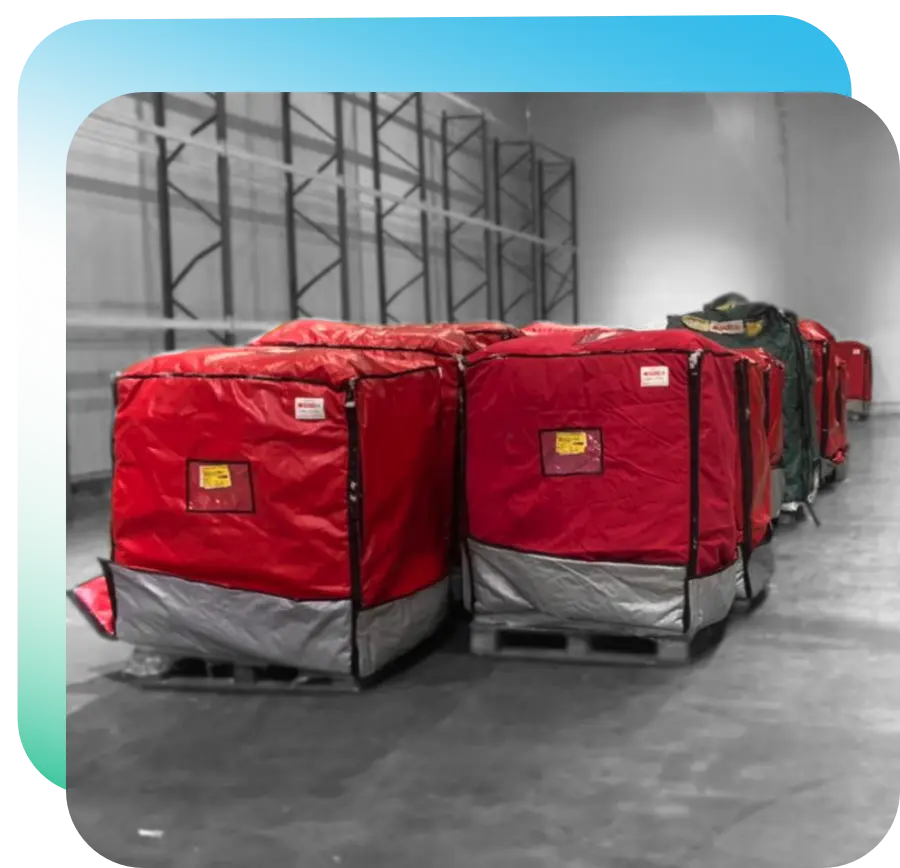
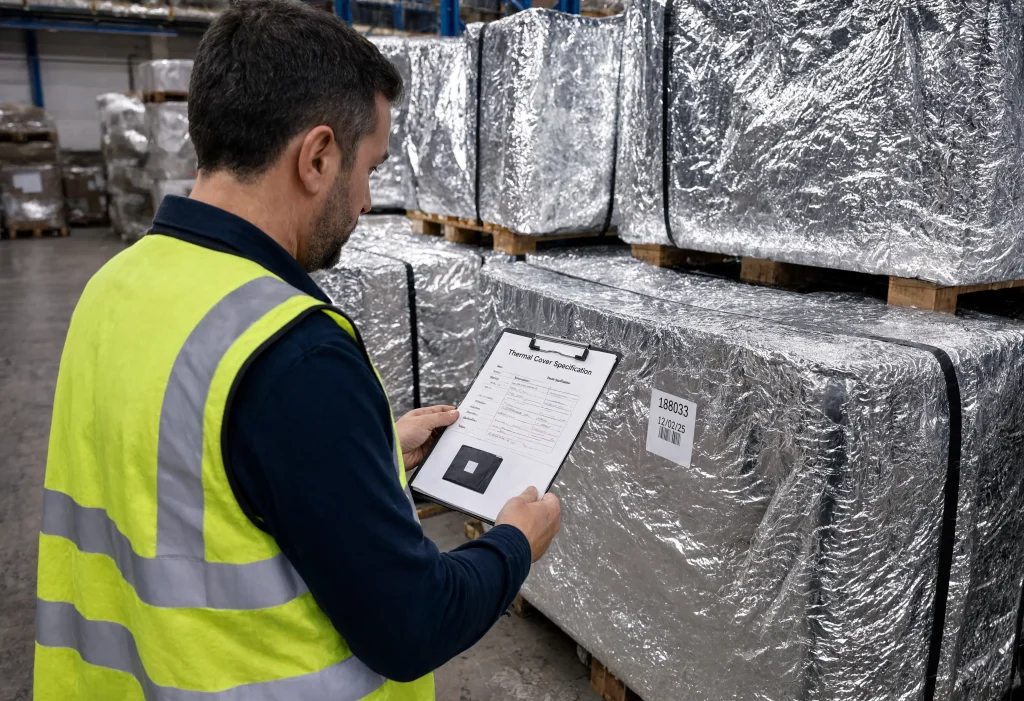
Specifying a custom thermal cover correctly the first time saves significant time, cost, and operational disruption. The specification process is straightforward when you know what information to gather — but procurement managers who come to it without a framework often end up with covers that almost work, which is worse than covers that obviously don’t. This guide covers the five things you need to define before contacting a manufacturer, what to expect from the sample process, and how to avoid the most common specification mistakes.
Why custom thermal cover specification matters for South African logistics
Off-the-shelf thermal covers are designed to fit the most common pallet dimensions and perform adequately across a wide range of conditions. For operations where “adequate” is sufficient — infrequent use, short transit times, moderate ambient temperatures — a standard cover may be fine.
For most commercial logistics operations in South Africa, adequate is not sufficient. FMCG distribution centres running hundreds of pallet movements per day, pharmaceutical operations with GDP documentation requirements, and industrial storage facilities with non-standard equipment all have specific needs that a standard cover cannot reliably meet.
The core issue is fit. A cover that doesn’t fit your equipment correctly creates thermal bridging at gap points — places where ambient air can enter or escape — which undermines the insulation performance of even the best materials. A cover built to your exact equipment dimensions eliminates these gaps before they become a problem.
The secondary issue is material specification. Different applications require different material combinations. A chilled dairy pallet on a 45-minute DC-to-store run has different insulation requirements to a frozen goods pallet on a 6-hour inter-provincial transit, or a pharmaceutical pallet sitting on an airport handling apron in midsummer. Getting the material specification right for your specific application is what separates a cover that performs consistently from one that performs sometimes.
Step 1 — Define dimensions for your custom thermal cover specification
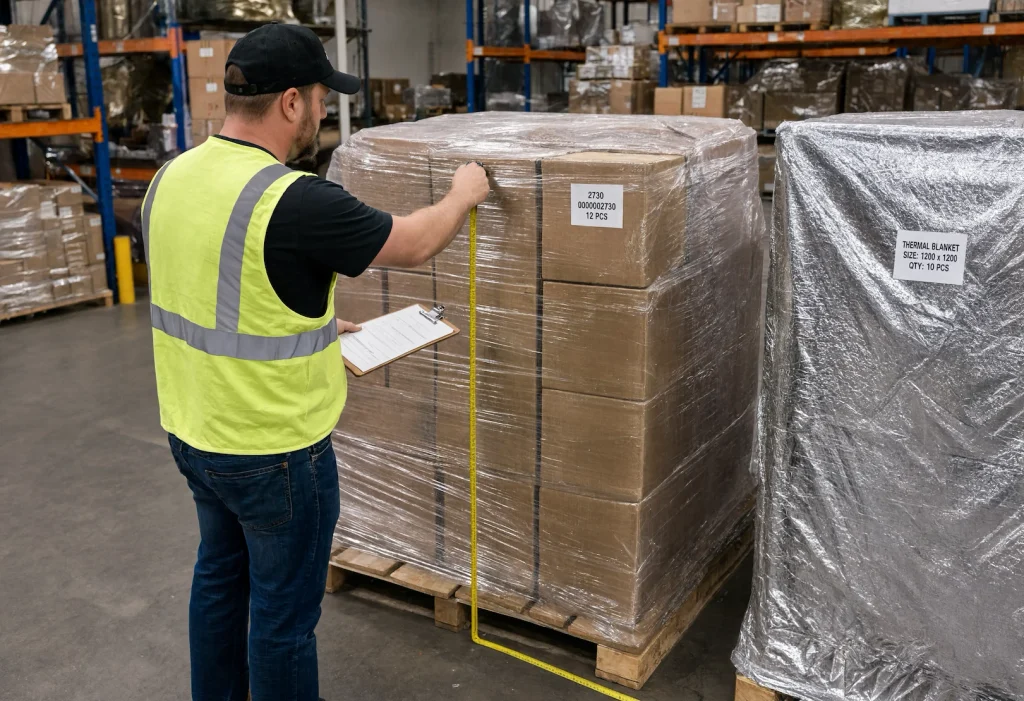
This is the most important step and the one most often done incorrectly. Measure your loaded pallet dimensions — not empty pallet dimensions. Loaded height varies significantly by product type and stacking configuration, and a cover specified for an empty pallet profile will be too short for most real-world uses.
Measure the following for each equipment type you need covered:
- Loaded height — from floor to the top of the highest point on the loaded pallet
- Width — the widest point of the pallet including any overhang
- Depth — front to back, again at the widest loaded point
If your operation includes multiple pallet types — standard ISO pallets, half-pallets, euro pallets, roll cages, or custom trolleys — measure and specify each separately. A single cover trying to fit multiple profiles will compromise on all of them. Specifying a dedicated cover for each equipment type is more cost-effective in the long run than managing the performance failures of a compromise specification.
For operations with non-standard or bespoke equipment, photographs alongside measurements help the manufacturer understand the profile. Unusual shapes — equipment with protruding handles, angled tops, or irregular base dimensions — are easier to specify accurately with visual reference.
Step 2 — Define your temperature requirement
Your temperature requirement has two components: the temperature your product needs to stay within, and the ambient temperature it will be exposed to during the unprotected window.
Product temperature range is typically defined by the product itself or by regulatory requirements. Refrigerated pharmaceuticals require 2°C to 8°C. Chilled FMCG products typically require 0°C to 5°C. Frozen goods require -18°C or below. Controlled room temperature products require 15°C to 25°C. If you are not certain of your product’s temperature requirement, check the manufacturer’s specification or your regulatory documentation before proceeding.
Ambient exposure temperature is the temperature your product will be exposed to during the unprotected handling window — loading dock, outdoor storage, airport apron, or wherever the cover needs to do its work. Use the worst-case ambient temperature your operation realistically encounters, not the annual average. In South African conditions, summer temperatures in the Western Cape, Gauteng, and KwaZulu-Natal regularly reach 35°C to 40°C on loading docks with direct sun exposure.
The gap between your product temperature and the ambient temperature is your temperature delta. A larger delta requires higher-performing insulation — thicker foam core, additional reflective layers, or both. Providing your manufacturer with the actual delta rather than a vague requirement (“it needs to stay cold”) allows them to recommend the right material specification for your application rather than defaulting to a generic standard.
Step 3 — Define your exposure duration and handling frequency
How long the cover needs to perform and how often it will be used are the two factors that determine both the material specification and the expected lifespan of the cover.
Exposure duration is the length of time the product will be unprotected during a single handling event — typically the dwell time at a loading dock, the time on a handling apron, or the transit time in an unrefrigerated vehicle. For most FMCG and pharmaceutical applications, this is measured in minutes rather than hours. For inter-provincial road transit or air freight, it may be hours. The cover needs to maintain your product’s temperature range for the full duration of the longest realistic exposure event.
Handling frequency determines how quickly the cover will wear. A cover used twice a week in a low-handling environment will last considerably longer than one applied and removed 10 times a day on a busy distribution dock. Providing your handling frequency upfront allows the manufacturer to specify materials and stitching appropriate for the wear pattern — and gives you a realistic expectation of the cover’s service life before you order.
Step 4 — Define your material and hygiene requirements
Standard thermal covers use a three-layer construction: reflective outer layer, foam core, and inner lining. Within this framework, material choices affect performance, durability, cleanability, and — in food and pharmaceutical environments — compliance.
Inner lining material matters most for hygiene-sensitive applications. Non-woven fabric linings are standard and perform well in most logistics environments. For pharmaceutical and food-grade applications where the cover may need to be wiped clean between uses, confirm that the lining material is non-porous and compatible with your facility’s cleaning agents. If covers will go through a wash cycle, confirm the materials and stitching are rated for it.
Foam core thickness determines the depth of your insulation and therefore the performance window. Thicker cores provide longer protection but add weight and bulk. For operations where handling speed matters — busy FMCG docks where covers are applied and removed rapidly — the right balance between insulation performance and ease of handling is worth discussing with your manufacturer.
Closure systems — Velcro, drawstrings, zips, or elastic bases — affect both the seal quality and the ease of use. A cover that is difficult to apply correctly will be applied incorrectly under operational pressure. The closure system should be specified with your actual handling environment in mind. See our materials and insulation technology page for a full breakdown of how material choices affect thermal performance.
Step 5 — Request a sample cover before finalising your specification
This step is the one most frequently skipped and the one that prevents the most problems. A sample manufactured to your specification and tested in your actual operation is the only reliable way to confirm that the cover performs as expected before you commit to a full order.
At Coversolutions, samples are typically ready within seven days of receiving a complete specification. The sample process works as follows: you provide dimensions, temperature requirements, exposure duration, and any material or hygiene requirements. A sample is manufactured to those specifications. You test it in your operation — on your actual equipment, in your actual handling environment, ideally during the hottest part of your operating day. If adjustments are needed, they are made before the full order is placed.
This approach eliminates the most common and most costly outcome in custom thermal cover procurement: receiving a full order of covers that almost work and spending the next six months managing the shortfall.
Request a sample specification for your operation →
Common custom thermal cover specification mistakes and how to avoid them
Measuring empty pallets instead of loaded pallets. Always measure at full load. Loaded height is the critical dimension.
Using average ambient temperature instead of worst-case. Your cover needs to perform on the hottest day of the year, not the average day.
Specifying one cover for multiple equipment types. Each distinct equipment profile should have its own cover specification. Compromise covers underperform on all profiles.
Skipping the sample step to save time. The sample process takes seven days. Correcting a full order of incorrectly specified covers takes considerably longer and costs considerably more.
Not communicating hygiene requirements upfront. Material substitutions for hygiene compliance after an order is placed are expensive and delay delivery. Raise food-grade or pharmaceutical material requirements at the specification stage.
Related reading
For industry-specific specification guidance, see:
- How to Choose the Right Thermal Pallet Cover for Your FMCG Operation
- Pharmaceutical Cold Chain: How Passive Thermal Covers Reduce Excursion Risk
Frequently asked questions
How long does the custom thermal cover specification process take in South Africa?
From receiving a complete specification — dimensions, temperature requirements, material preferences — a sample is typically ready within seven days. Full order lead times depend on volume and current production schedule. Contact the Coversolutions team with your specification for a confirmed timeline.
What information do I need to provide to get a custom thermal cover quote?
Loaded pallet dimensions for each equipment type, your product temperature range, the ambient temperature your operation encounters, expected exposure duration, handling frequency, and any hygiene or material requirements. The more specific you can be, the more accurately the manufacturer can specify the right cover for your application.
Can I get custom thermal covers made for non-standard equipment in South Africa?
Yes. Custom manufacturing means there is no standard template — covers are made to the dimensions you provide. Non-standard equipment, bespoke trolleys, and irregular pallet profiles are all handled through the same specification process. Photographs alongside measurements help when the equipment profile is unusual.
What is the minimum order quantity for custom thermal covers?
Contact the Coversolutions team directly for minimum order quantities — these vary depending on the specification and material requirements of the specific cover. For operations that need to test a specification before committing, the sample process is the right starting point.
Do custom thermal covers come with a workmanship guarantee?
Coversolutions covers come with a 12-month workmanship guarantee covering manufacturing defects. This applies to covers manufactured to the agreed specification and used within the conditions and frequency discussed during the specification process.